THO Game Calls - The Best Place on the Net to Make, Buy & Sell Custom Game Calls
September 09, 2010, 04:25:21 PM *
Welcome, Guest. Please login or register.

Login with username, password and session length
News: Check out Bad Dog's Burl Source for some of the prettiest call making wood you can find  http://www.burlsource.com/
 
   Home   Help Search Login Register  

Pages: [1]   Go Down
  Print  
Author Topic: Making an Arkansas style insert - method 1  (Read 1343 times)
0 Members and 1 Guest are viewing this topic.
BigB
Global Mentor & Site Administrator
Custom Call Maker
*****
Offline Offline

Age: 32
Location: Decatur, Illinois
Posts: 2373


Email
« on: November 08, 2008, 10:17:28 PM »


I had some guys at work ask me how to make an Arkansas style duck call insert.  So, I read up on a couple of methods of how to do it.  Here is method one. 

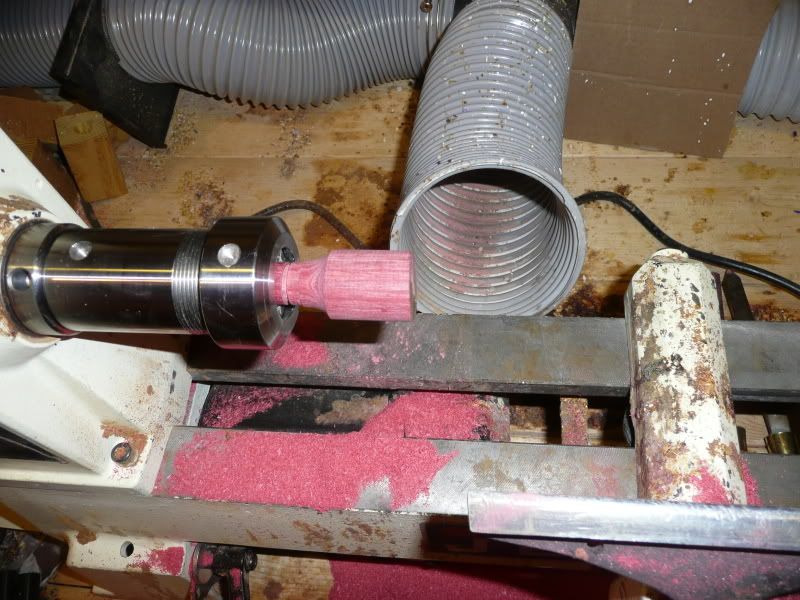
I started with a 1" diameter rod that was 4" long, and I mounted it in my 4 jaw chuck.
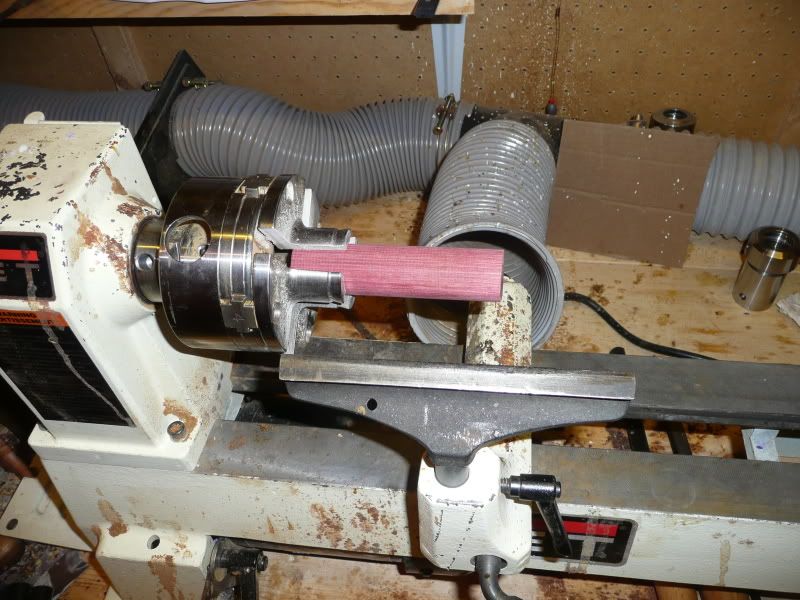

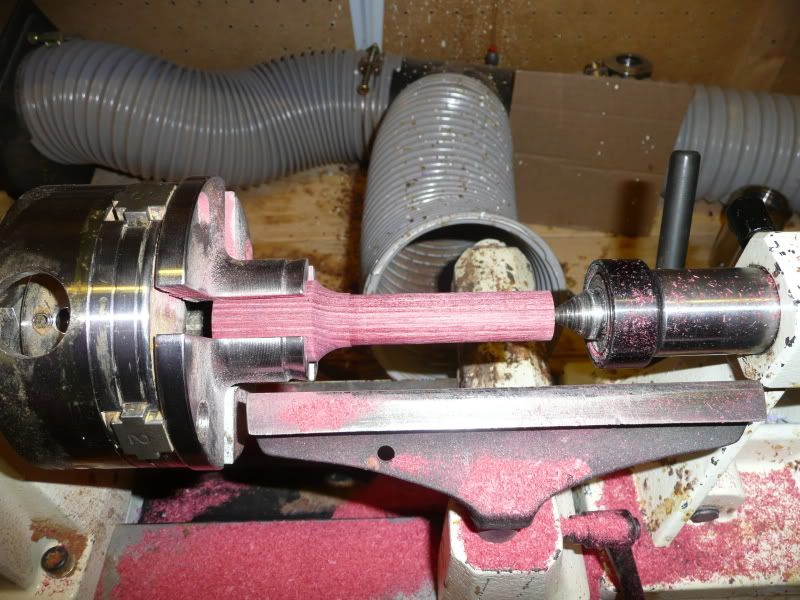
Then I started turning the insert to shape.  I measured how long I wanted the tenon, and started turning the tenon to 5/8" diameter.

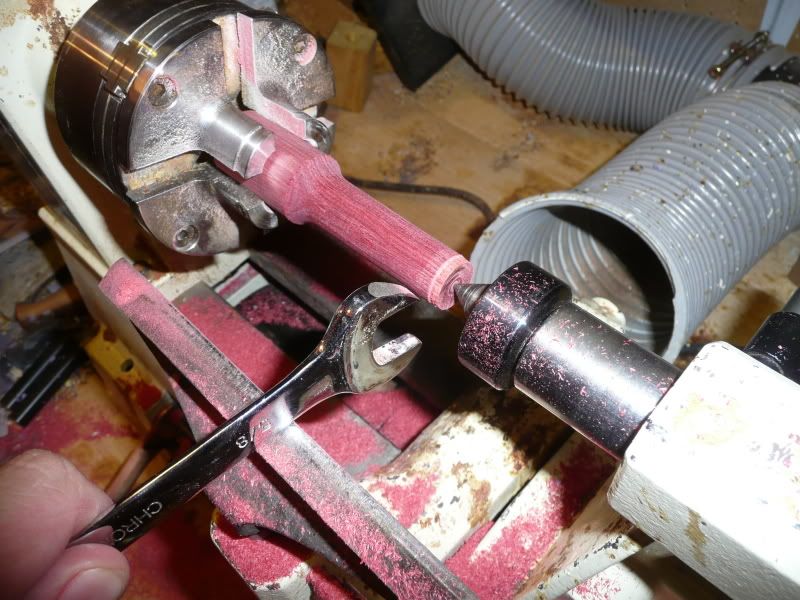
Once you get close to the final diameter, you can use a 5/8 wrench to make sure you end up with a 5/8" diameter tennon.

Remove the 4 jaw chuck from the lathe, and install the collet chuck.  Install the insert into the collet chuck.
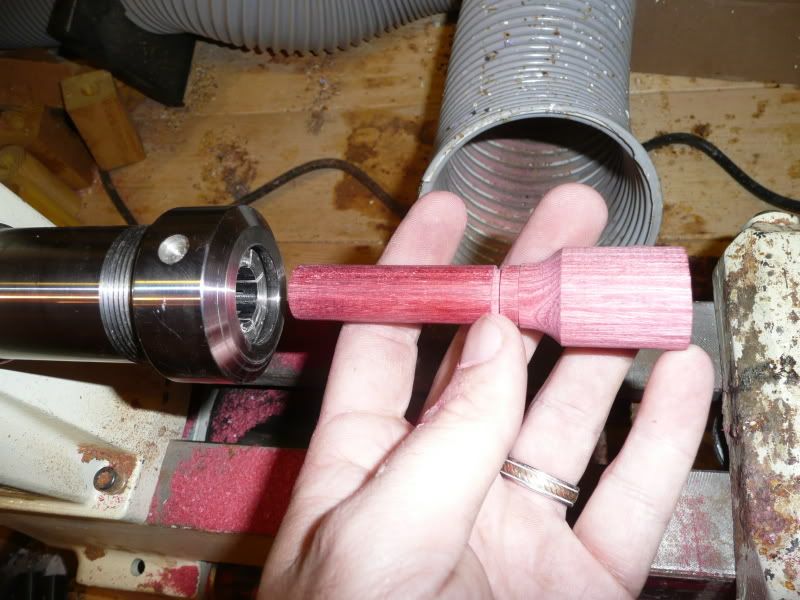


Now is the time to drill the exhaust hole and tone channel.  I use a drill stop on the drill bit to drill the exact depth that I need.  I always double check that the drill stop is at the right depth.
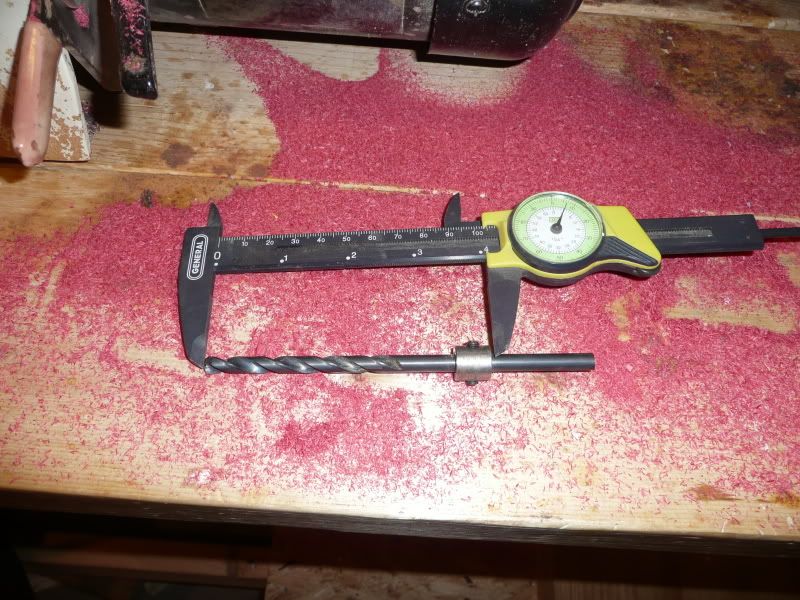

Drill the insert to the desired depth.
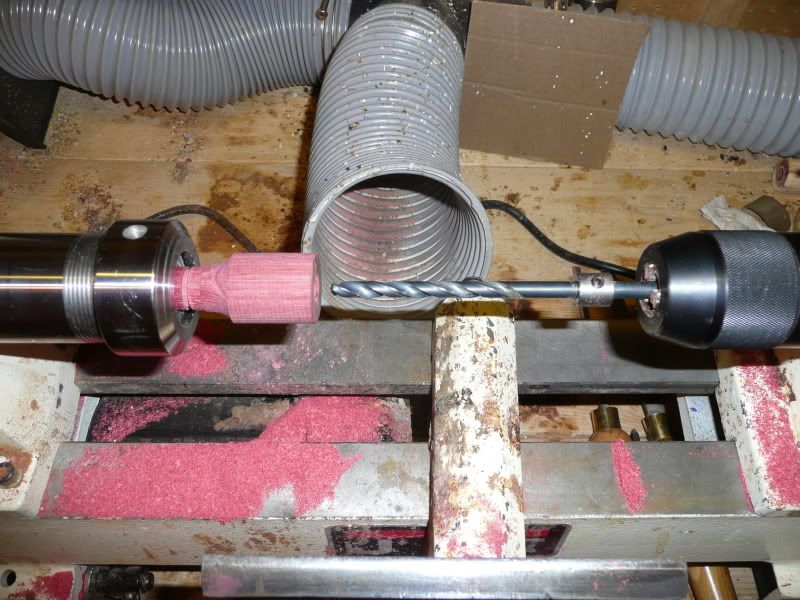

Finish shaping the insert to final design and finish sand the insert.
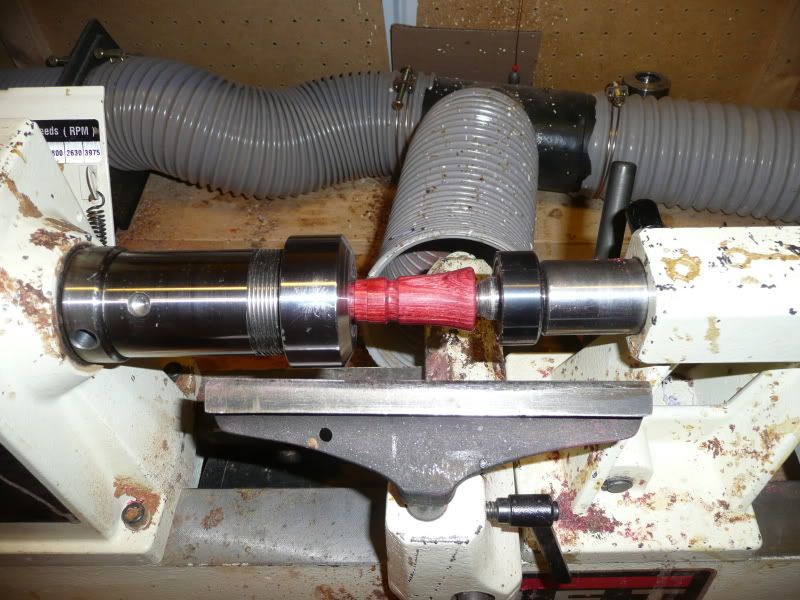

Remove the insert from the collet chuck, and place it in the toneboard jig.  Knowing how deep you drilled the insert, measure from the exhaust end of the insert to your reference point on the jig.  Secure the insert in the jig with the set screw.
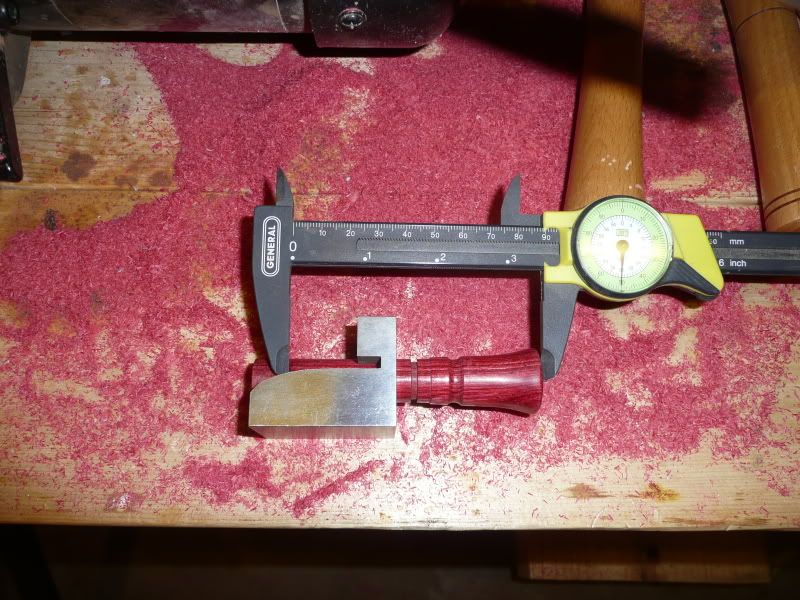

Take the insert to the band saw, and cut off the excess part above the toneboard jig. And cut out the cork notch.  I don't cut right against the jig with the band saw blade because it dulls the band saw blade quickly.
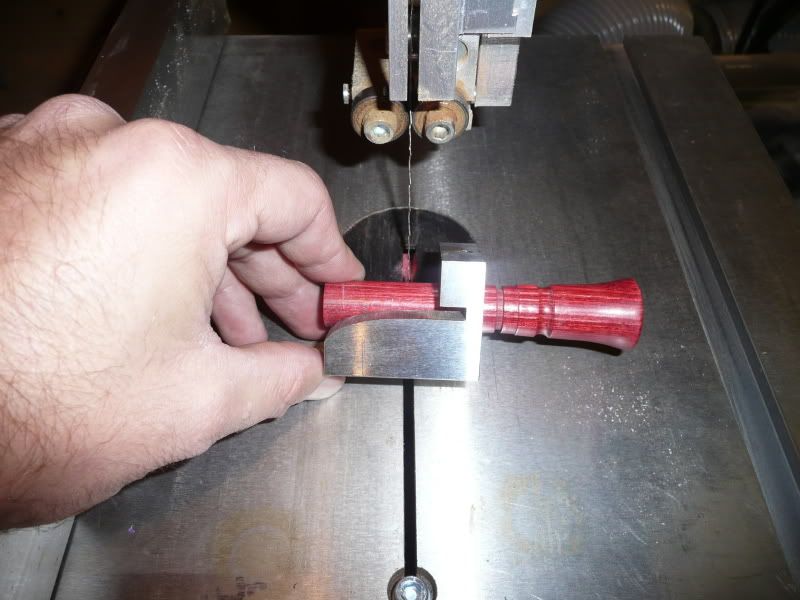

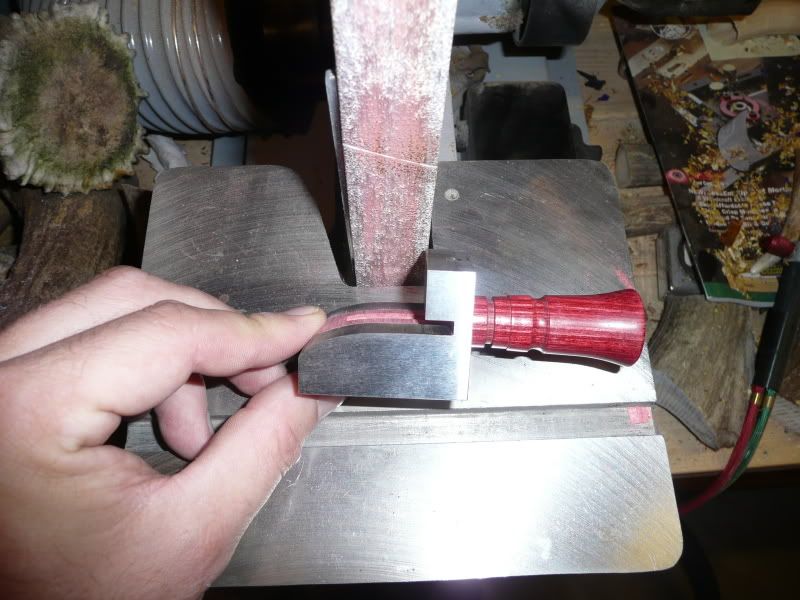
I then take the toneboard still installed in the jig to the belt sander, and sand down to the profile of the jig.

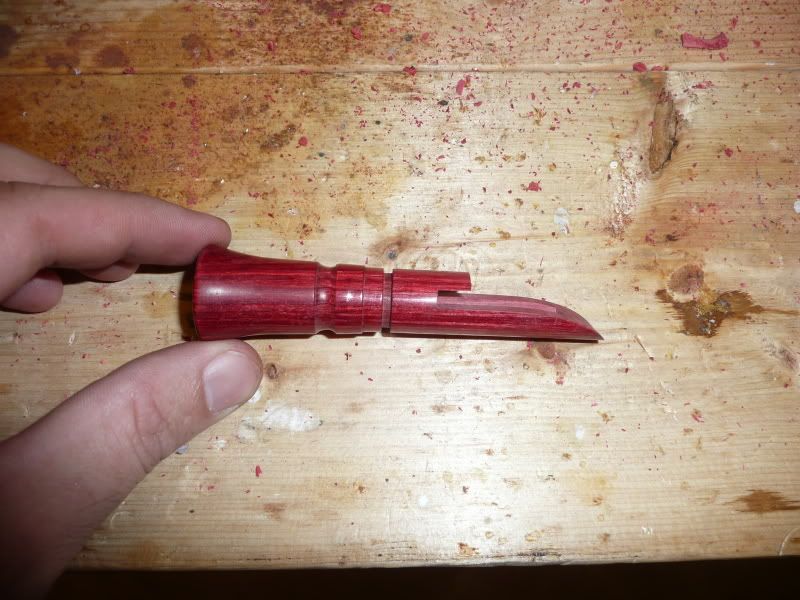
Remove the insert from the jig, and it is ready for a reed, cork and tuning.


And feedback is appreciated.

Thanks,
Brian

Logged

i don't need no stinkin' e-caller
Braz
Global Mentor & Site Administrator
Custom Call Maker
*****
Offline Offline

Age: 66
Location: Yuba City, Natzifornia
Posts: 4833


WWW
« Reply #1 on: November 08, 2008, 10:39:34 PM »

Very nicely done. Great pictures with great descriptions. Very nice.
Logged

Braz
"Suppose you were an idiot. And suppose you were a member of Congress.. But I repeat myself."--Mark Twain
dogcatcher
Predator Call Mentor
Custom Call Maker
*****
Online Online

Posts: 1798


« Reply #2 on: November 09, 2008, 12:12:39 AM »

Another good one! 

Marvin
Logged

Combat Infantryman, the ultimate hunter where the prey shoots back.

"Call and they will come."
TheJester357
Global Mentor & Moderator
Custom Call Maker
*****
Offline Offline

Age: 38
Location: Dallas, OR
Posts: 955


Eames Custom Calls


« Reply #3 on: November 12, 2008, 12:39:43 PM »

A great tutorial, but one thing to point out. The belt sander will attack the toneboard jig, removing material from the jig on the toneboard surface. If you cut close with the jigsaw, and then cut to the jig profile with a file, your jig will not be dammaged. I used to do this the same yay as you, until a friend showed me the damge the belt sander was causing. Hope this helps.

 Bob
Logged

Life, Liberty, and the pursuit of anything with web feet.

 Charter member of the Cooper Hollow Mafia
BigB
Global Mentor & Site Administrator
Custom Call Maker
*****
Offline Offline

Age: 32
Location: Decatur, Illinois
Posts: 2373


Email
« Reply #4 on: November 12, 2008, 12:56:38 PM »


Hey Bob, will a belt sander remove material on a hardened jig?  I understand about removing material on an unhardened jig.  And a follow up question would be about removing jig material with a file - I am assuming that the file is harder than sandpaper, so I'm confused why the file won't take off jig material as well.  :-\

I'll take a look at my jig to see if I have some marks on it from the belt sander.


Thanks for the heads up.

Brian

Logged

i don't need no stinkin' e-caller
GN-1
Custom Call Maker
*****
Offline Offline

Posts: 141


Email
« Reply #5 on: November 12, 2008, 04:55:49 PM »

Bob is right on with this one! The sand paper will affect your jig surface. A file will not damage it at all. Shawn
Logged
TheJester357
Global Mentor & Moderator
Custom Call Maker
*****
Offline Offline

Age: 38
Location: Dallas, OR
Posts: 955


Eames Custom Calls


« Reply #6 on: November 14, 2008, 09:40:41 AM »

I had a hard time believing it too, until I messed anound with the back of the jig. I just barely hit the corner on the belt sander, and it reoved a significant amount. Then I too a file and tried the same thing, and the file skips right over. Try it. Good luck!

 Bob
Logged

Life, Liberty, and the pursuit of anything with web feet.

 Charter member of the Cooper Hollow Mafia
Doss
Custom Call Maker
*****
Offline Offline

Age: 21
Location: Ooltewah, TN
Posts: 78


Email
« Reply #7 on: January 30, 2010, 09:14:47 AM »

where do you buy these sweet jigs you have here... that is slick.
Logged

Where's my turkey?
Big Trestle
Custom Call Maker
*****
Offline Offline

Location: Pocono Mtn's of PA
Posts: 289


WWW Email
« Reply #8 on: February 09, 2010, 06:43:21 PM »

Job well done

Tim
Logged

Pages: [1]   Go Up
  Print  
 
Jump to:  

Powered by MySQL Powered by PHP Powered by SMF 1.1.11 | SMF © 2006-2009, Simple Machines LLC Valid XHTML 1.0! Valid CSS!